

Property Settlement in Family Law: Why Single Expert Valuations Save Time and Legal Fees

Property settlement is stressful enough without a battle over the value of the home. Two different valuations can hold up negotiations for weeks.
- Each party pays for separate reports.
- More arguments from different people.
- Solicitors take time building bridges.
- Settlements move further out.
FVG Property is a Melbourne property valuation firm that prepares reports for matters like these, including a shared property valuation for settlement. In this blog, we will understand how a single expert valuation works and when it suits a family law matter.
Purpose: A single expert property valuation helps settlements move along more efficiently.
Cost Consideration: Instructing one report jointly can cut down on repeated fees.
Independent Assessment: An impartial valuer assesses the property on behalf of both parties.
Professional Insight: FVG Property prepares independent property valuations to a scope both sides have agreed.
Outcome: Less argument over figures.
What Is a Single Expert Property Valuation in Family Law?
A single expert valuation is one report, prepared by one independent valuer who is instructed by both parties together. It sets the property’s value for settlement purposes and takes the place of separate reports from each side. Everyone works from the same figure, though the report informs the settlement rather than deciding it.
| Aspect | Single expert valuation | Separate valuations |
|---|---|---|
| Who instructs | Both parties together | Each party on their own |
| Number of reports | One | Two or more |
| Value figure | A shared starting point | Competing figures are likely |
| Fees | A single report fee | Fees are doubled up |
| Suits | Disputes about value | Complex or heavily contested assets |
Get One Valuation Both Sides Trust
How Can a Single Expert Valuation Reduce Legal Fees and Delays?
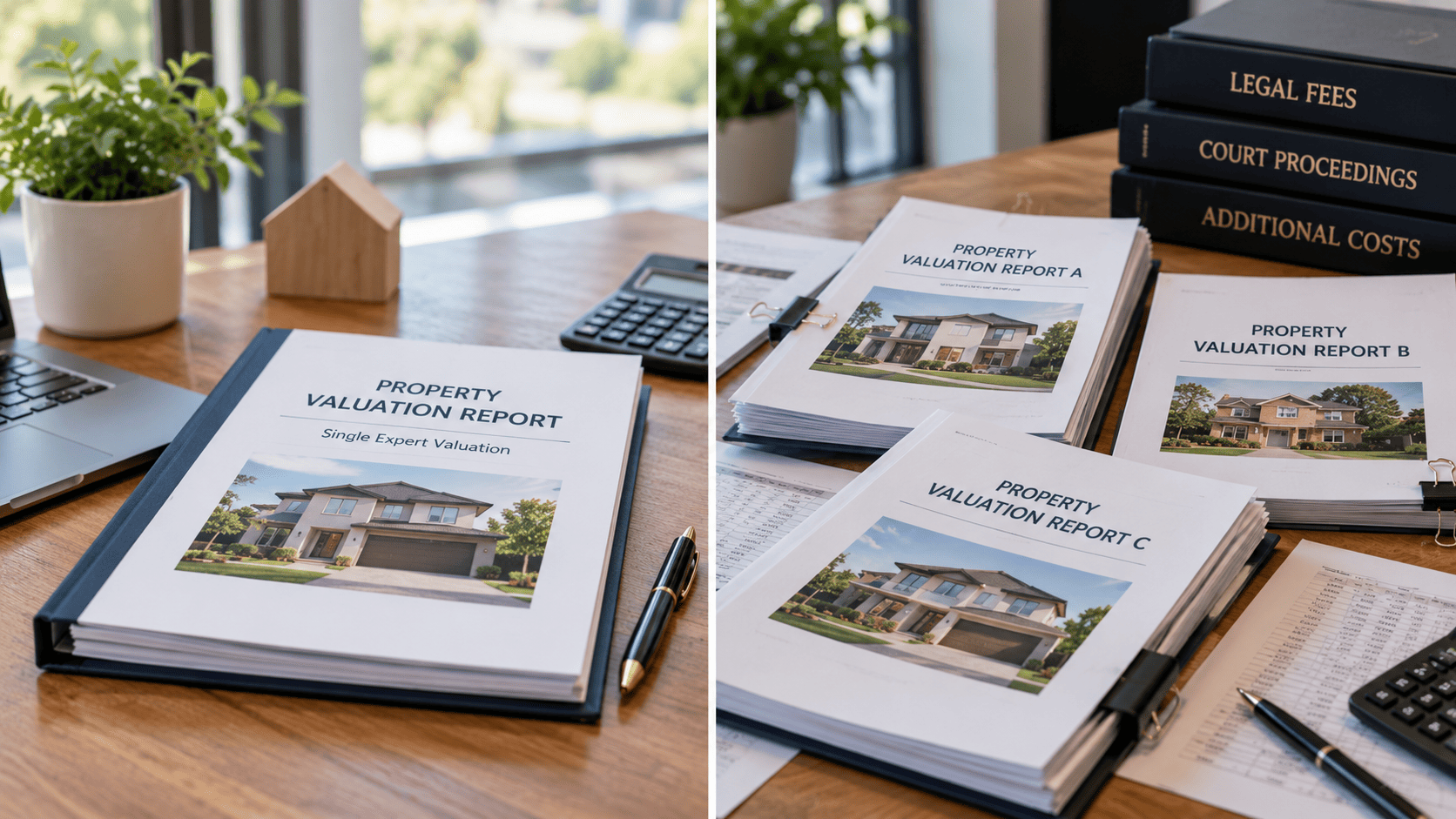
Duplicated valuation fees go, and so do arguments between competing reports. Once one figure is on the table, solicitors spend less time reconciling differences, so negotiations can turn to other issues sooner.
- Duplicated costs: One report is paid for instead of two.
- Competing figures: When two reports differ, extra correspondence tends to follow.
When Is a Single Expert Valuation Appropriate for a Property Settlement?
It suits matters where both parties accept a joint approach and the main question is what an asset is worth. The family home or a rental property is a common example. Complex or heavily contested assets may still need separate evidence.
Suitable Situations
- Jointly owned homes: Both parties are already invested in the outcome.
- Investment or commercial property: Income and comparable sales give clear inputs.
- Cooperative parties: Both sides can agree on the instructions.
Why Specialist Experience Matters
Matrimonial valuers understand what settlement matters need, including the valuation date, report format and how solicitors will use the findings.
When Separate Evidence May Still Be Needed
- A party questions the valuer’s independence or instructions.
- The asset is unusual or tied to a business.
How Is an Independent Property Valuer Appointed and What Does the Process Involve?
The two parties, usually through their solicitors, agree on a valuer and send joint written instructions. An inspection follows, recognised methods are applied and one report is prepared. Settling the scope at the start helps prevent disputes later.
- Agree the valuer: Both sides need to accept the valuer’s impartiality.
- Send joint instructions: The address, valuation date, purpose and assumptions are stated.
- Book the inspection: Access times are set in advance.
- Assess value: Recent sales are usually the basis for residential property, and rental return may also be weighed for income producing property.
- Issue one report: The same document goes to both sides.
What Should You Consider Before Choosing a Property Valuer in Melbourne?

Check experience with the property type, independence, familiarity with settlement matters, report requirements and how well the valuer communicates with solicitors. Local knowledge helps, because values can shift from street to street in property valuations in Melbourne.
| Factor | What to ask |
|---|---|
| Experience | Has the valuer assessed this type of property before? |
| Independence | Will they take instructions from both parties? |
| Report | Does the format meet what solicitors need? |
| Communication | Will they respond promptly to both legal teams? |
Established property valuers can explain their qualifications and memberships on request. Real estate valuers who work across residential and commercial assets can often handle mixed holdings under one appointment.
Plan Your Settlement Valuation
Conclusion
A clear valuation can stop a property dispute from dragging on. A jointly appointed expert valuation gives both parties one figure, one fee and one scope to agree on. FVG Property brings its property valuation experience to matters like these and can discuss your requirements with you or your solicitor. If you are weighing up valuation options for a settlement, get in touch to talk through the next step.
FAQs
How much does a single expert valuation cost?
Fees depend on the property type, size, complexity and report requirements. A jointly instructed report usually means one fee, which the parties often share. Ask for a written quote before instructing so both sides agree on the cost split.
What if I disagree with a single expert’s assessment?
Raise it through your solicitor. Options may include asking the valuer to clarify the report or considering further evidence. The right step depends on your matter, so seek legal advice before acting.
How long does a valuation take?
Timeframes depend on access, property type and scope. A straightforward residential property is usually quicker than a commercial one. Ask the valuer for an estimate when instructing, and allow extra time if inspection access needs coordinating.
Is appointing a single expert compulsory?
No. Many parties choose it by agreement, but it is not automatic. Whether it suits your matter depends on the circumstances and any directions in your case, so check with your solicitor.

