

The question is…
Is It Worth Challenging Your Land Tax Assessment in Victoria?
I read an article on social media, stating or inferring that the land tax had a so called correlation to the current passing rental, moreso, that the assessed land tax would give you insight as to the “Highest and Best Use” of the property or not.
I have also had numerous clients disappointed that when they see a 20% increase in value apportionment from the previous year, they find it inconceivable that an objection can not be lodged.
At this time of year it may be appropriate to supply a very quick and succinct overview of the process as we know it.
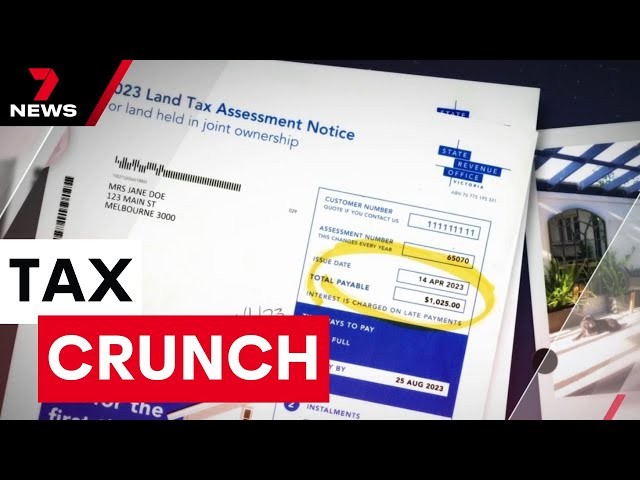
In Victoria, land tax is assessed annually by the Valuer-General Victoria (VGV), part of the State Revenue Office Victoria (SRO).
1. What Value is Used?
Land tax is based on the Site Value (SV) of the land only – not the Capital Improved Value (CIV).
Site Value equates to the unimproved value of the land assuming it is “vacant”, but with the services available and planning controls in place.
Improvements such as buildings, paving and fit-out are excluded.
2. Valuation Date
Land tax is assessed using the site value as at 1 January of the preceding year.
For example: 2026 land tax assessment uses 1 January 2025 valuations.
Councils conduct general revaluations annually, and those figures feed in to the SRO system.
3. Who Pays?
Land tax applies if:
- You own a non-principal place of residence (non-PPR); and
- The total taxable site value exceeds the threshold of $50,000
Common exemptions include:
- Principal place of residence
- Primary production land (qualifying rural land)
- Some charities and trusts (subject to criteria)
4. Aggregation
The SRO aggregates all taxable Victorian land across the same ownership structure.
Companies, individuals and trusts are assessed separately.
Trusts often face higher surcharge rates.
Related entities are generally not automatically grouped (unlike payroll tax).
5. Progressive Rates
Land tax in Victoria is progressive.
There is a threshold amount (no tax), then increasing marginal rates.
Possible surcharge components may apply (e.g., absentee owner surcharge).
The rate depends on total aggregated taxable site value and ownership structure.
6. How the Valuer-General Determines Site Value
The VGV applies:
- Comparable sales analysis of vacant land
- Apportionment methods (where improved sales are used)
- “Highest and Best Use” principles
- Zoning and planning overlays
In built-up areas such as Caulfield, Toorak and South Yarra, site value assessments often reflect development potential, zoning capacity, density allowances, corner influence, and frontage/depth ratios.
7. Objection Process
Step 1 – Objection to Council:
Must be lodged within 2 months of receiving the valuation notice.
Grounds may include incorrect site value, wrong land description or incorrect NAV/CIV/SV split.
(refer to FVG website, previous blog)
Step 2 – Review:
Reviewed by council valuer or VGV delegate.
Step 3 – VCAT:
If unresolved, the matter can escalate to the Victorian Civil and Administrative Tribunal. Time limits are strict.
8. Key Practical Issues
Annual revaluations have led to significant site value increases in metro infill areas.
Development sites are particularly exposed.
Holding costs for passive land banking have risen.
Commercial zoned land in inner Melbourne has experienced volatility.
9. Strategic Considerations
- Monitor zoning changes and overlays
- Review subdivision timing (aggregation impact)
- Consider ownership structuring (trust vs company vs individual)
- Analyse objection viability when sales evidence weakens
To discuss any related property matter herein or other issues, please contact
Mark Ruttner, Managing Director
mr@fvg.com.au 0411 419 674

